Question preparation
The earliest problem was turning learning material into usable questions efficiently.
Question preparation was the starting point. Publishing, conducting, reviewing and reusing assessments expanded the product into the wider workflow around a quiz.
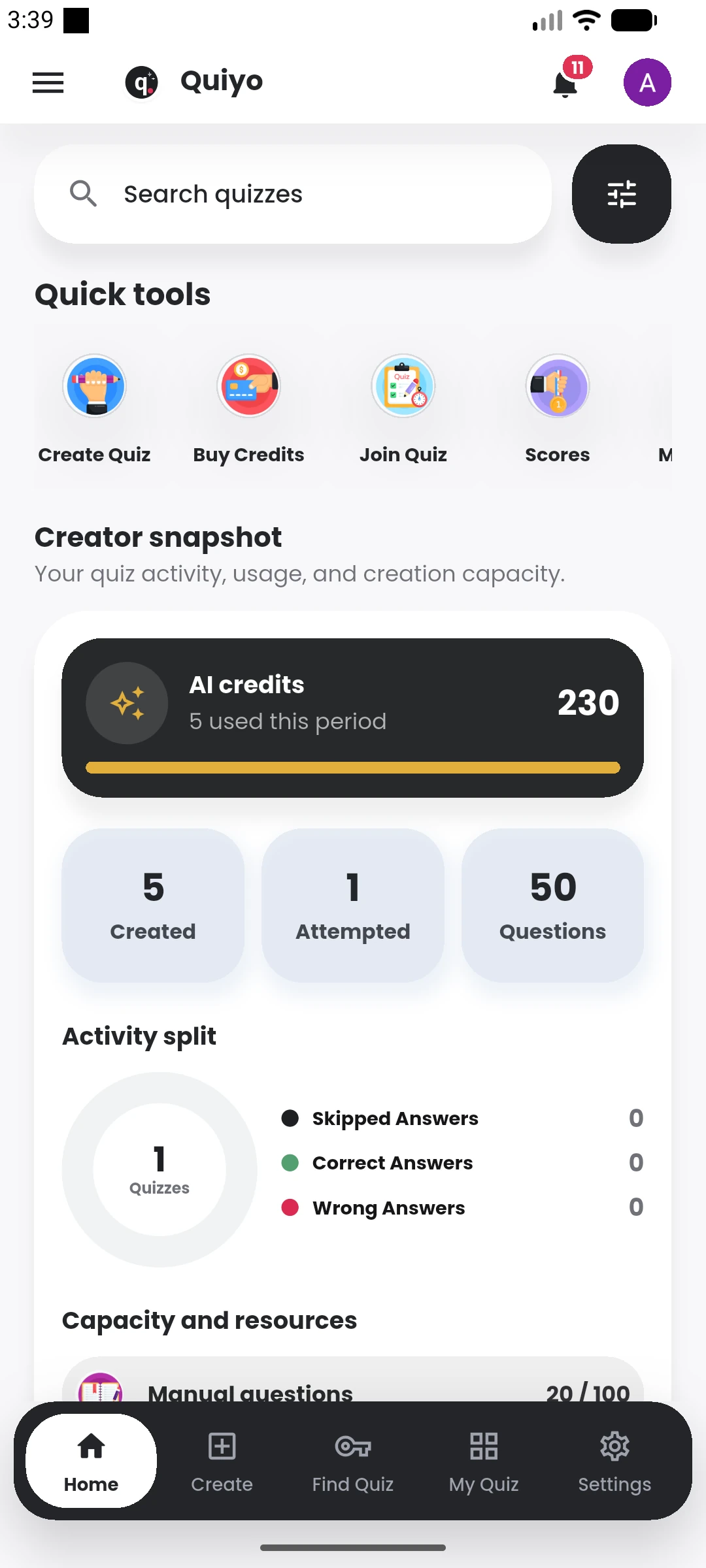
 QuiyoAI-powered quiz studio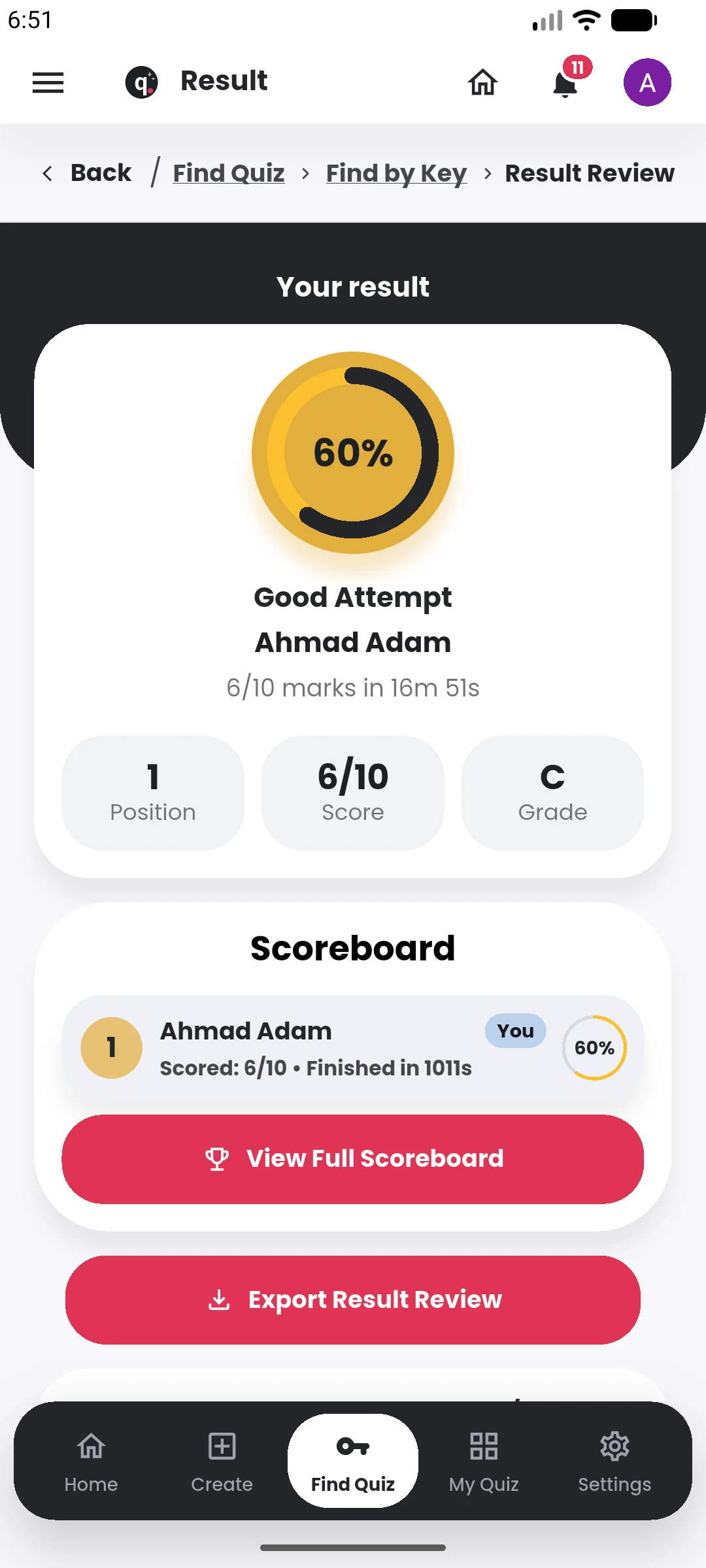
SUPPORTED BY LEADING TECHNOLOGY ECOSYSTEMS


The first problem was question preparation. Publishing, participation, results, corrections and reuse quickly showed that the useful workflow continued long after the questions were generated.
Institutional assessment added shared materials, question banks, teams, blueprints and CBT operations, which shaped the wider product that exists today.
The product follows the full assessment lifecycle because each stage produces information the next stage needs.
The earliest problem was turning learning material into usable questions efficiently.
Publishing and conducting the assessment introduced access, timing and participant needs.
Attempts created a need for review, analytics, appeals and stronger question management.
Repeated assessment work led to shared materials, question banks, teams, blueprints and CBT operations.
Quiz generation solved one part of the assessment process: getting questions ready. The work around those questions still involved source material, publishing, participant access, attempts, marking, corrections, result review and reuse.
Quiyo expanded by bringing those connected jobs into the same product. Study tools grew from the same material used for quizzes, public discovery grew around published quizzes, and Institution Workspace added the structure needed when assessments involve staff, programmes, participants and recurring CBT sessions.
That progression is why the current product covers both personal study and larger assessment operations while keeping a familiar quiz-centred workflow.
Each part of Quiyo grew from work that already happened around assessment and study.
Continue to the main About page for the broader product story.