Define the coverage
Set the topics, sections or learning areas that the assessment should represent.
Define coverage and balance before selecting questions, then assemble the assessment against that plan.
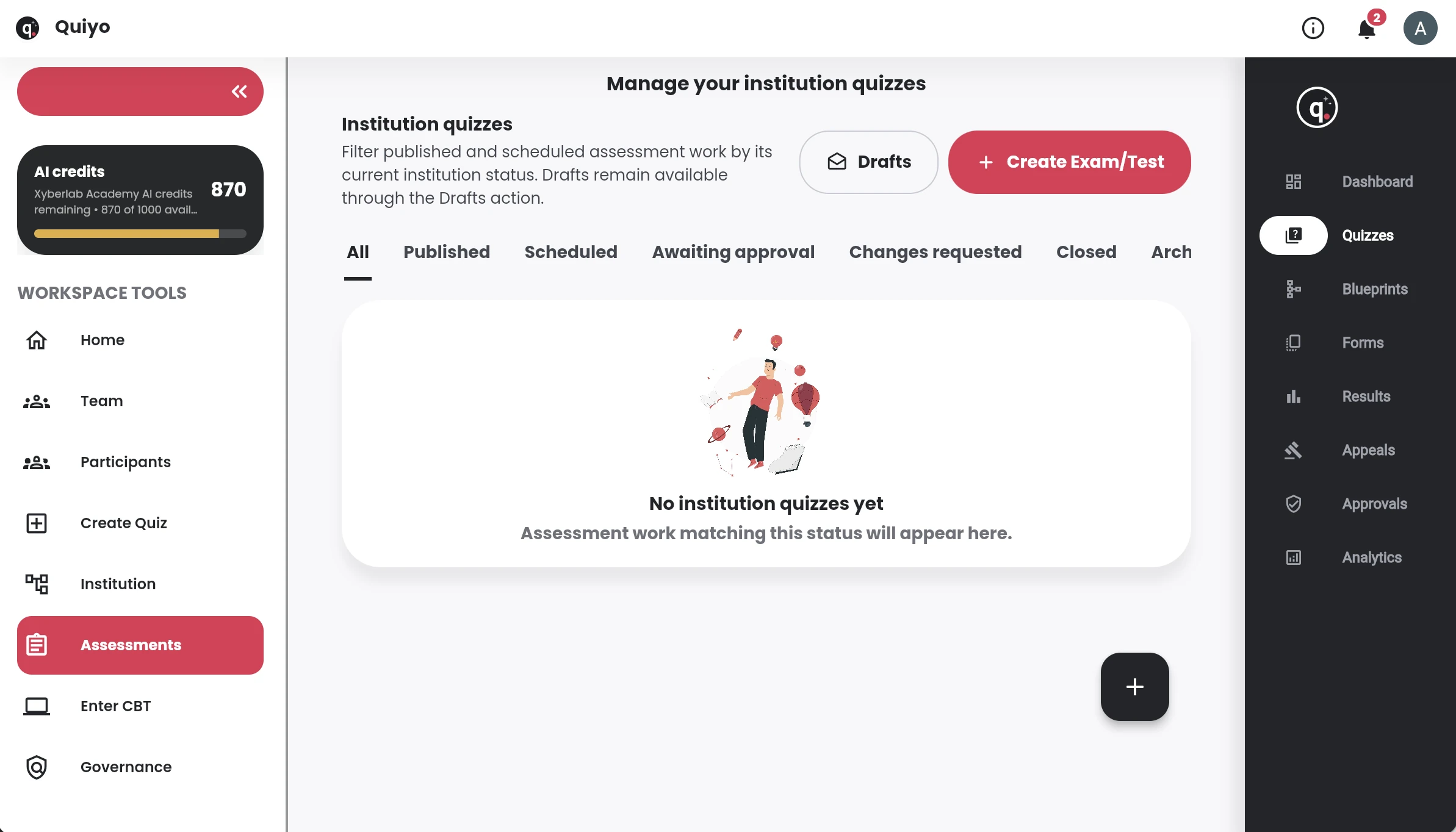
 QuiyoInstitution Workspace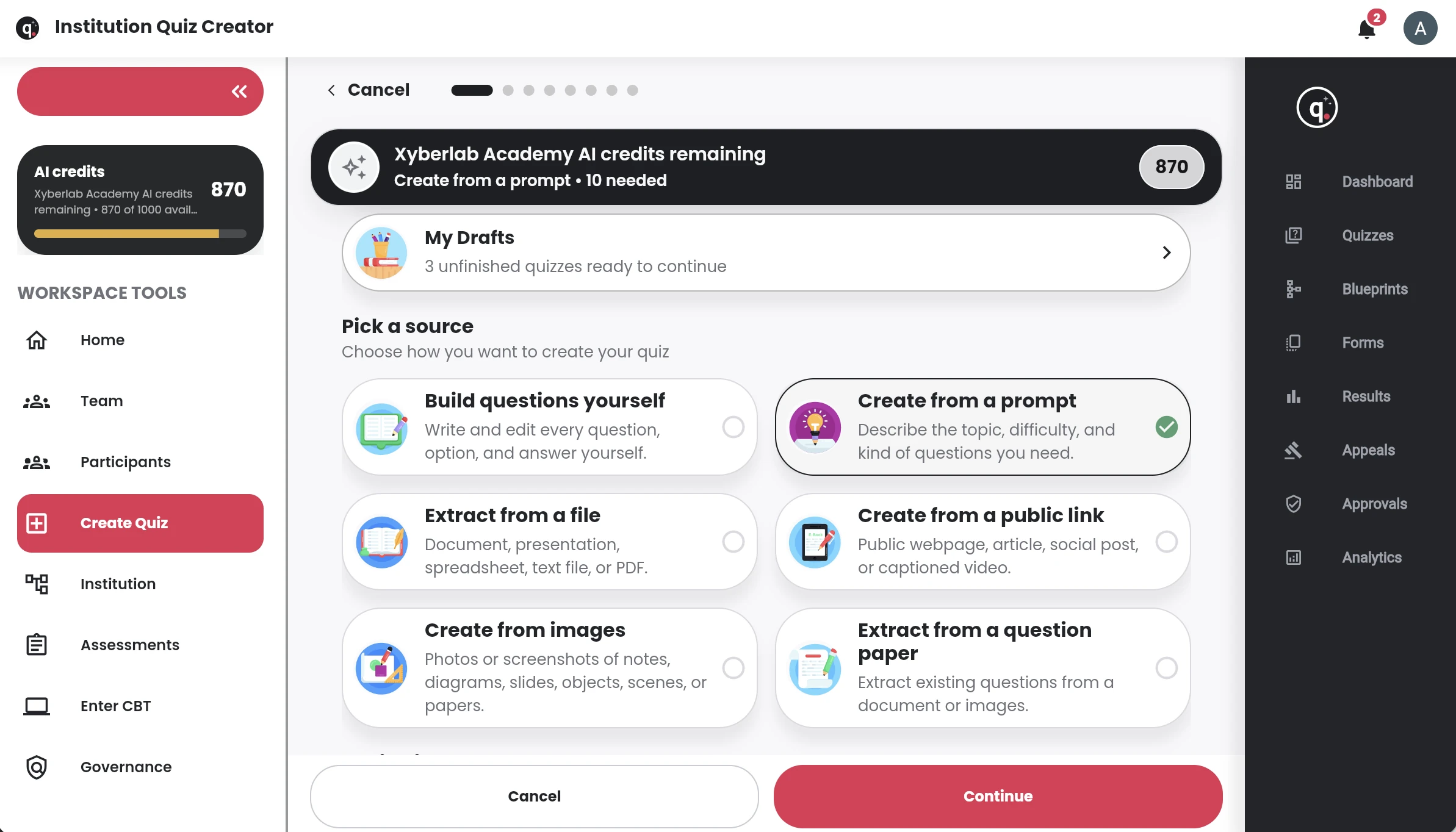
SUPPORTED BY LEADING TECHNOLOGY ECOSYSTEMS


Assessment Blueprints define the topics, sections or learning areas that should appear in an assessment and how the balance should be distributed.
Staff can then assemble the paper from the Question Bank with a clearer view of what the final assessment is meant to cover.
Blueprints give teams a structured bridge between course coverage and the final assessment.
Set the topics, sections or learning areas that the assessment should represent.
Decide how the assessment should distribute questions or marks across that coverage.
Use managed questions to build the paper against the coverage defined in the blueprint.
Check the completed assessment and its coverage before it moves into delivery.
A blueprint is prepared before the final assessment is assembled. It gives staff a place to define the coverage expected from the assessment and connect that plan to the questions available in the institution’s managed bank.
This makes it easier to check whether an assessment is drawing from the intended topics, modules or learning objectives before candidates see it. The blueprint can also guide the balance of questions across different parts of the course.
Once the structure is acceptable, the assessment can be assembled from the approved question pool and continue through the normal scheduling, delivery and result workflow.
Blueprints sit between curriculum context and final question selection, giving review teams something concrete to check before release.
Define the balance first, then build the assessment against that plan.